
What Employee Recognition Means for Frontline Teams
Ask a merchandiser when they were last thanked for a perfect shelf. Then notice how long it takes them to answer.
Brands spend months on trade strategy. They plan the range, the price and the promotion.
But on the day, it all comes down to one person in the aisle who makes it real. The reality is that a person rarely hears that it mattered.
I think about this often. Employee recognition should be part of how good execution happens, and keeps happening. In this article, I dive into how that could transform your field teams.
Where Recognition is Often Lowest
Fieldwork can be lonely. Our merchandisers and reps start early, cover long distances, and spend hours alone in stores. Most days, there’s no manager nearby to see a job done well.
The data shows this goes beyond our business. Gallup’s State of Global Workplace 2026 report found that only 18% of South African employees are engaged at work, which is below the global figure of 20%.
22% also said they felt lonely most of the previous day.
Frontline workers feel this the most. Research shows that, out of a group of 7,500 workers:
- Only about a third feel they are often recognised for their work.
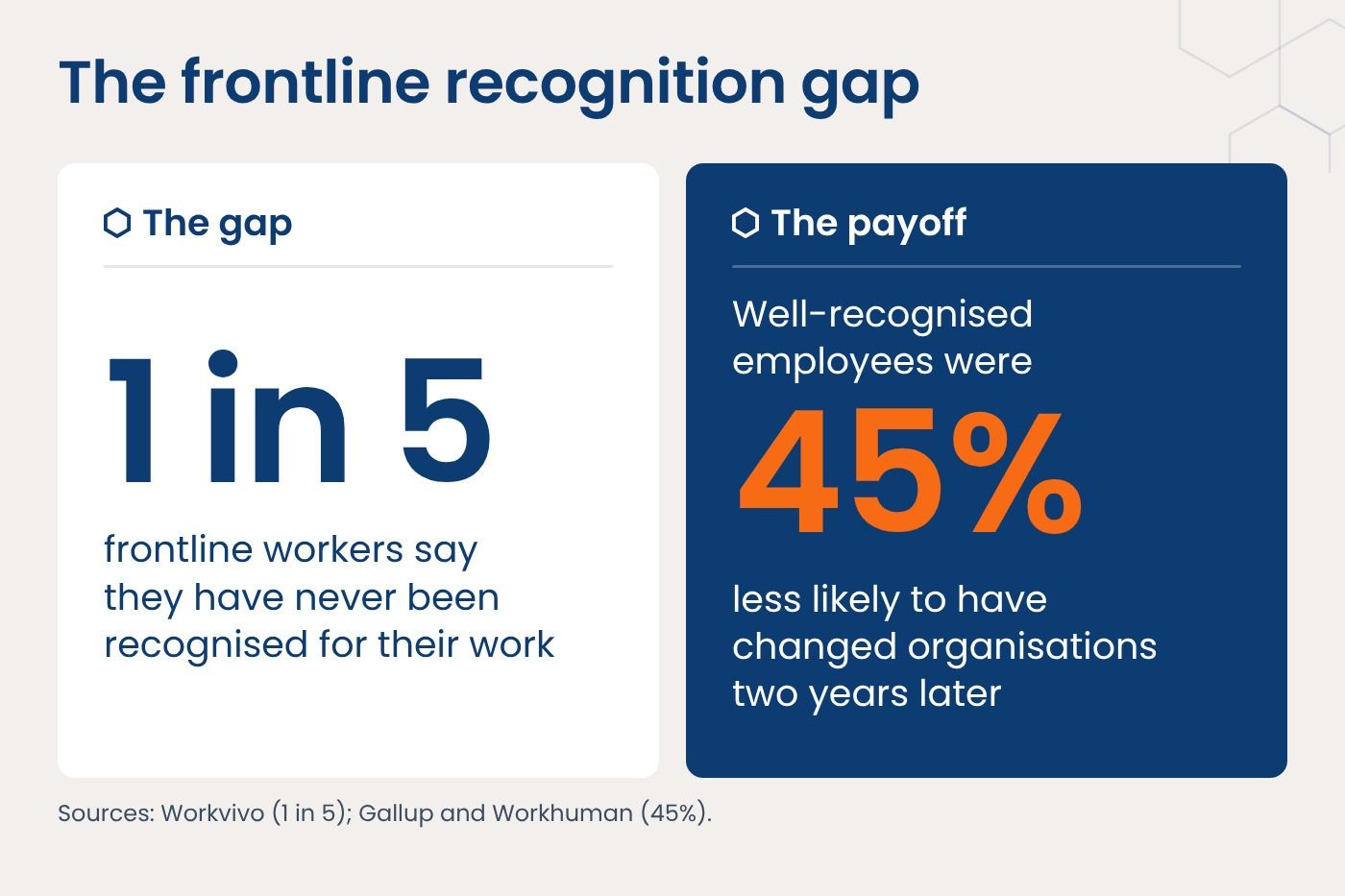
- One in five say they have never been recognised at all.
- Half believe their company cares more about desk-based staff.
Yet 49% feel they have a bigger impact than their office colleagues.
I think they’re right. The people who decide what shoppers see on the shelf are the ones most likely to feel overlooked.
Why Recognised People Stay
Recognition isn’t just about making people feel good. It also changes who stays.
Gallup and Workhuman tracked the career paths of nearly 3,500 employees from 2022 to 2024. Those who received high-quality recognition were 45% less likely to have left their job two years later.
In fieldwork, that matters more than most people realise. When an experienced merchandiser leaves, a lot leaves with them, including:
- The relationship with the store manager who has a say in shelf space.
- Knowing the planogram without checking it.
- The skill to build a promo display that draws shoppers in.
- The eye that spots a gap before it turns into a lost sale.
A new person can learn all of this. But it takes time, and the shelf doesn’t wait.
That’s why I see recognition as an execution issue, not an HR one. Consistent shelves come from people who choose to stay.
What the Best Recognition Looks Like
“Well done, team” is kind, but it doesn’t tell anyone what they did right.
Good employee recognition names the work: the store, the display, the gap someone closed before a shopper noticed.
It also comes quickly, while the person still remembers the moment.
For many frontline workers, it should be said out loud. In that same global survey, 39% of frontline workers said being praised publicly would make them feel more valued than getting a bonus.
Field teams have long been at a disadvantage here. If you can’t see the work, you can’t thank someone for it.
That’s changing. Completed store visits are recorded on the StockFix dashboard, so managers can see which stores have been covered. That record gives leaders something specific to thank people for.
They can then say thank you by name that same day. The same data that shows brands what’s happening on the shelf can show us who made it happen.
One Thing Every Leader Needs to Do This Month
You only need ten minutes to start making a difference. This week, pick three people on your team:
- Look at their store visits.
- Find one specific thing each of them did well.
- Then tell them, by name, exactly what it was.
If they’re comfortable with it, do it where others can see. It’s a small habit, but people remember who noticed them.
Behind Every Shelf is Someone Worth Thanking
Strategy only becomes a sale when someone puts it on the shelf. Often early, often alone.
If you’re a brand, ask yourself two questions. Do you know what’s happening on your shelf and who is responsible? Get in touch with our team today to see how we can help you fill that gap.
Great shelves are built by people who feel seen.
Know what’s happening on your shelf and who made it happen, with field teams backed by real-time visit data.
Get In Touch Today